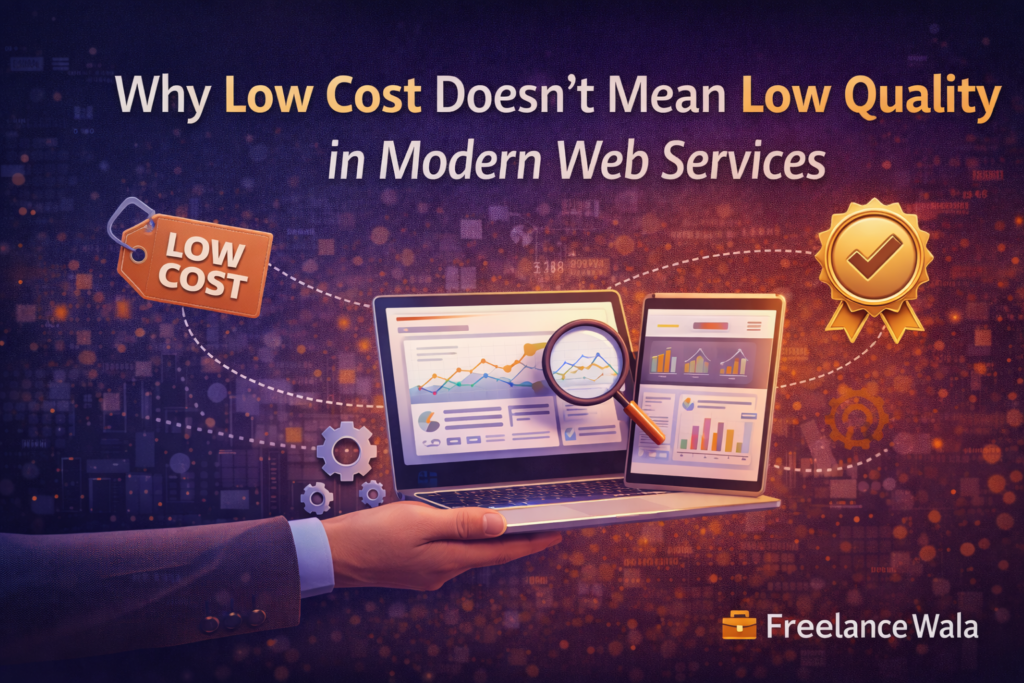
When businesses hear the word “low-cost,” they often assume “low quality.” It’s a common belief if something is affordable, it must be compromised.
But in today’s digital economy, that assumption is outdated.
Thanks to lean business models, automation, remote teams, and efficient systems, professional web services can now be both affordable and high quality.
Let’s understand how.
The Myth: Higher Price Equals Better Quality
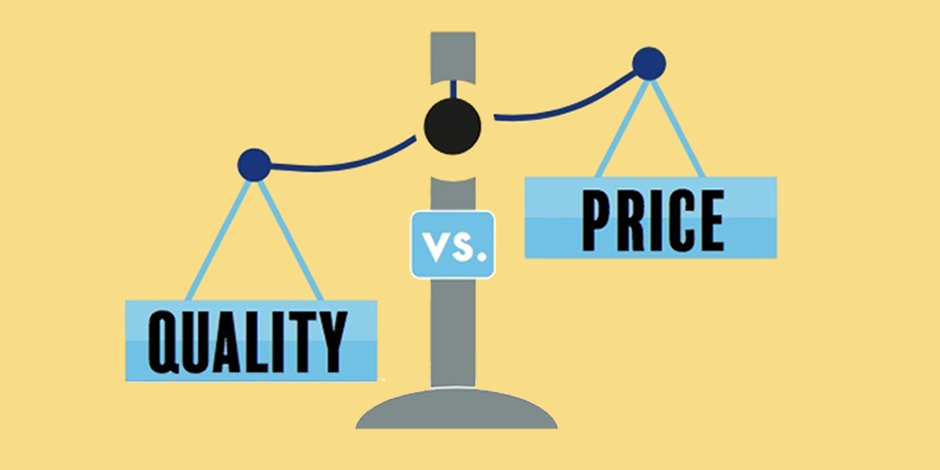
For years, businesses associated high pricing with premium service. Large agencies charged heavy retainers because they had:
- Big office spaces
- Large in-house teams
- High operational expenses
- Traditional business structures
Clients indirectly paid for overhead not just expertise.
But the digital service industry has evolved.
What Is a Lean Business Model?
A lean business model focuses on:
- Efficiency
- Reduced overhead
- Smart use of technology
- Flexible teams
- Outcome-based work
Instead of spending on physical infrastructure and unnecessary layers of management, lean businesses invest in:
- Skilled professionals
- Streamlined processes
- Automation tools
- Performance-driven execution
The result? Lower costs without compromising quality.
How Lean Models Benefit Clients
1. Lower Operational Costs
When agencies reduce overhead expenses, clients don’t pay for unnecessary infrastructure.
2. Faster Decision-Making
Lean teams have fewer approval layers, which means quicker turnaround times.
3. Better Communication
Smaller, focused teams improve clarity and reduce delays.
4. Outcome-Focused Delivery
Lean businesses prioritize measurable results rather than excessive processes.
5. Flexibility
Services can be customized according to client needs without rigid packages.
Where Quality Actually Comes From
Quality does not come from expensive offices or large teams. It comes from:
- Experience
- Technical expertise
- Structured processes
- Clear strategy
- Attention to detail
A well-managed lean team can often outperform a large, traditional setup.
Technology Makes Efficiency Possible

Modern tools allow lean agencies to maintain high standards while staying affordable.
Examples include:
- Project management software
- Automation systems
- Cloud-based collaboration
- AI-assisted workflows
- Performance analytics tools
These tools reduce manual workload and increase precision.
Efficiency improves quality it does not reduce it.
Why This Matters for Startups and SMEs
Startups and small businesses need:
- Smart spending
- High ROI
- Scalable solutions
- Professional digital presence
They do not need inflated costs.
Lean service models allow SMEs to access professional-grade websites, marketing, and digital solutions without enterprise-level pricing.
The Real Difference: Value Over Price
Instead of asking, “Is it cheap?” businesses should ask:
- What value am I receiving?
- Is the outcome measurable?
- Is the service scalable?
- Is the team experienced?
Low cost with strong systems equals high value.
The Freelance Wala Approach
Modern agencies like Freelance Wala operate with lean, optimized systems that:
- Minimize overhead
- Focus on execution
- Prioritize client outcomes
- Deliver scalable solutions
This allows businesses to receive professional service without unnecessary financial strain.
Conclusion
Low cost does not mean low quality. In fact, in today’s digital ecosystem, it often means smart structure and efficient execution.
The real measure of quality is not the size of the office or the price tag it is the results delivered.
For startups and SMEs, lean models provide the perfect balance between affordability and performance.
In modern business, efficiency is strength not compromise.