If you are a startup founder or business owner, you’ve probably heard the term “full-stack developer.” It sounds technical, maybe even intimidating. But understanding what it means can help you make smarter decisions about your website, product, or tech team.
Let’s break it down in simple terms.
Think of a Website Like a Restaurant
To understand full-stack development, imagine a restaurant.
- The front of the restaurant is what customers see décor, tables, menu design.
- The kitchen is where the actual cooking happens.
- Behind that, there’s inventory management, billing systems, and storage.
A website works the same way.
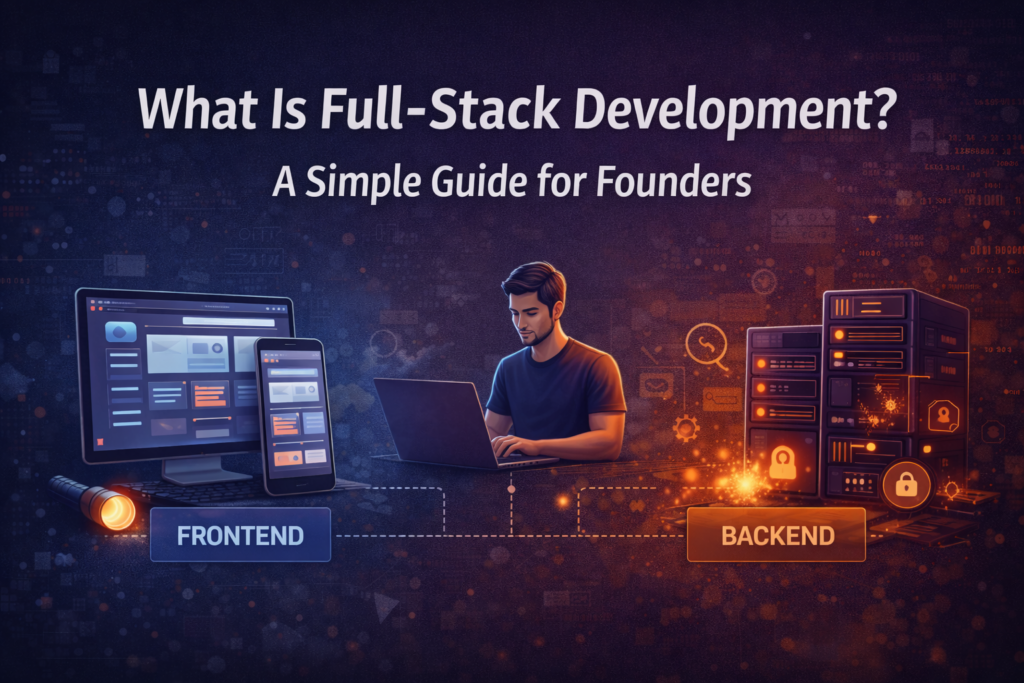
- Frontend = What users see and interact with
- Backend = The logic, database, and server working behind the scenes
- Full-Stack = Someone who understands and works on both
A full-stack developer can handle the entire system from what the user clicks to how the data gets stored.
What Is Frontend Development?
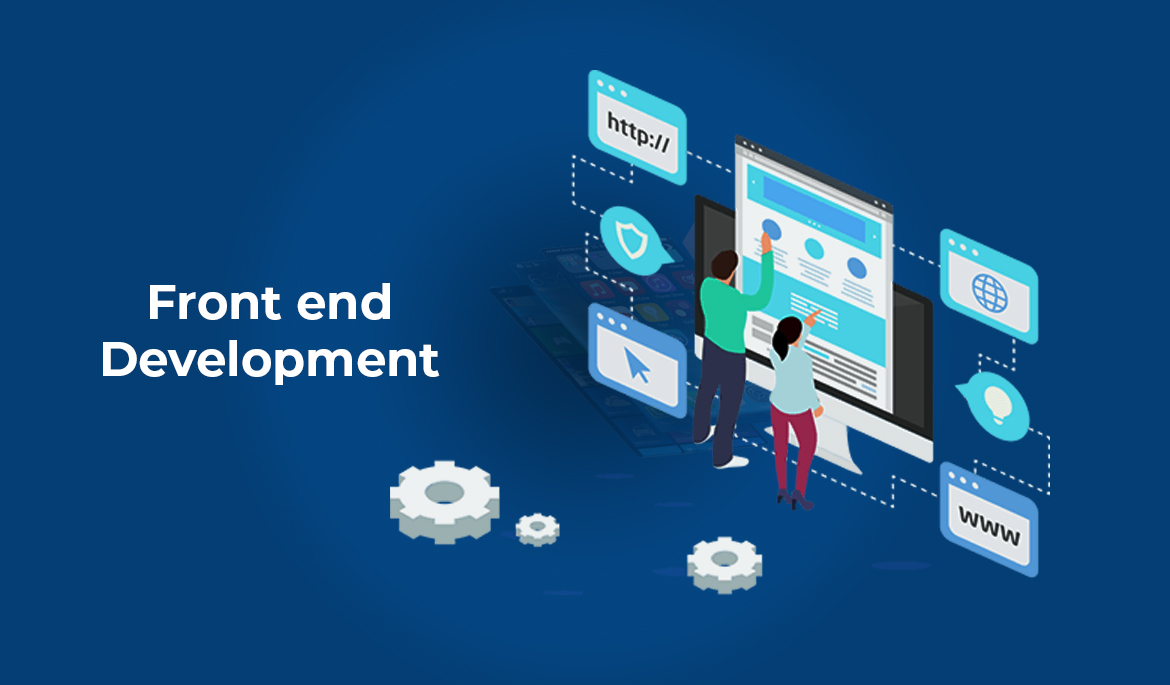
Frontend is the visible part of your website or web app.
It includes:
- Design layout
- Colors and typography
- Buttons and forms
- Mobile responsiveness
- Animations and interactions
This is what your customers experience directly.
If your frontend is poorly designed:
- Users leave quickly
- Conversions drop
- Your brand looks unprofessional
Frontend is about user experience.
What Is Backend Development?
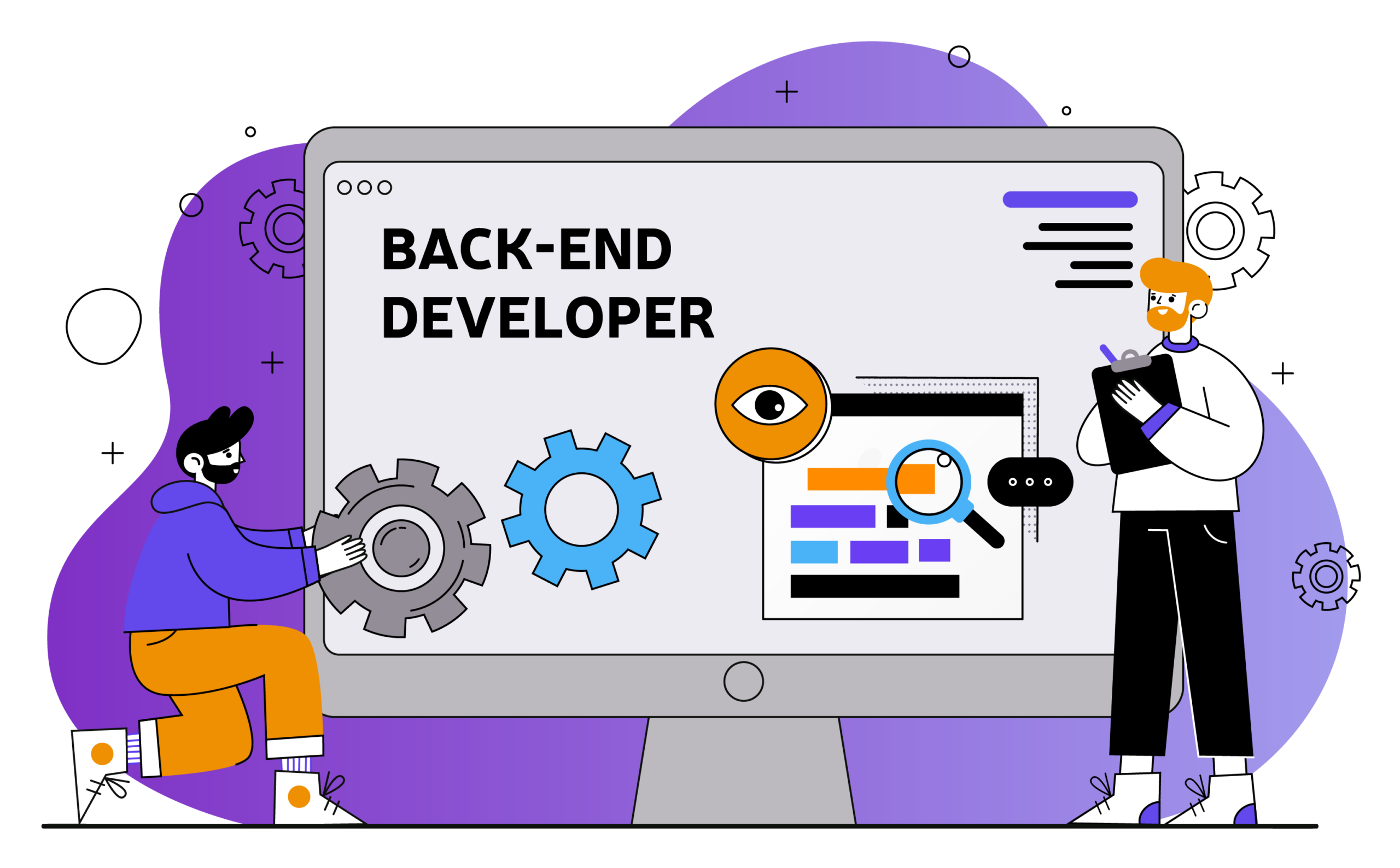
Backend is the invisible engine of your website.
It handles:
- Databases
- User logins
- Payments
- Form submissions
- Business logic
- Security
For example:
When someone fills out a contact form, the backend processes the data and stores it safely.
If backend systems fail:
- Orders don’t process
- Payments fail
- Data gets lost
- Security risks increase
Backend is about functionality and stability.
So What Is Full-Stack Development?
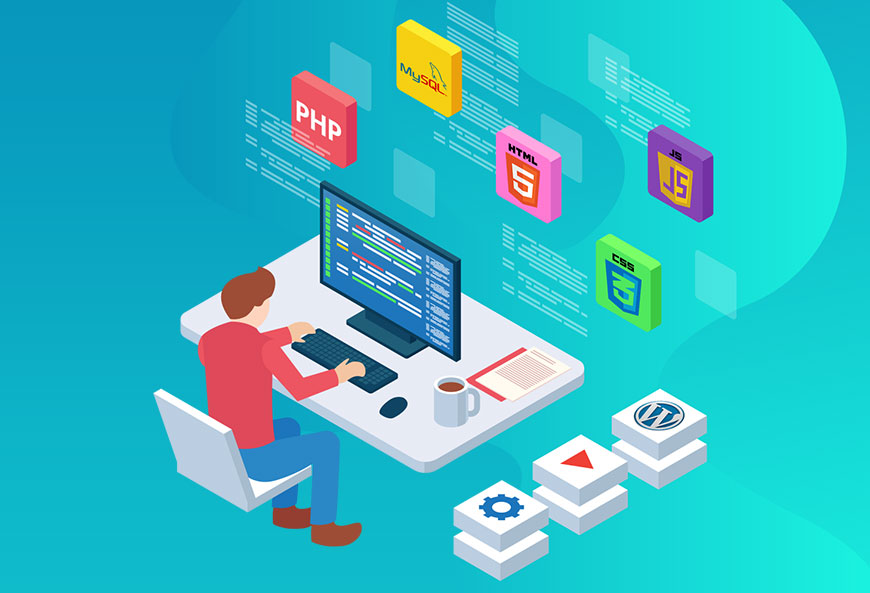
Full-stack development means working on both frontend and backend.
A full-stack developer:
- Builds the user interface
- Connects it to the database
- Manages server logic
- Ensures everything works smoothly together
Instead of hiring two separate specialists, a full-stack developer can manage the entire workflow.
Why Should Non-Tech Founders Care?
You don’t need to code but you do need to understand what’s happening “under the hood.”
Knowing full-stack basics helps you:
- Hire the right developer or agency
- Avoid technical misunderstandings
- Estimate timelines realistically
- Understand development costs
- Make better product decisions
When founders understand the structure of a website, communication becomes smoother.
Is a Full-Stack Developer Always the Best Choice?
Not always.
For small to medium business websites, a skilled full-stack developer is often efficient and cost-effective.
For larger platforms:
- You may need specialized frontend experts
- Backend architects
- DevOps engineers
It depends on project complexity.
Full-Stack Development and Business Growth
A strong full-stack foundation ensures:
- Faster development cycles
- Fewer coordination issues
- Better system integration
- Easier scalability
If your website or platform is built properly from the start, scaling becomes easier later.
Common Misunderstanding: Full-Stack Doesn’t Mean “One Person Does Everything”
It means understanding both layers not necessarily doing all of it alone.
In agencies, full-stack capability often means:
- Seamless collaboration
- End-to-end project handling
- Technical oversight across systems
For founders, that means fewer headaches.