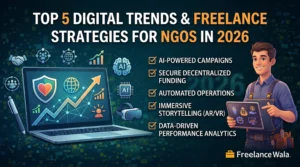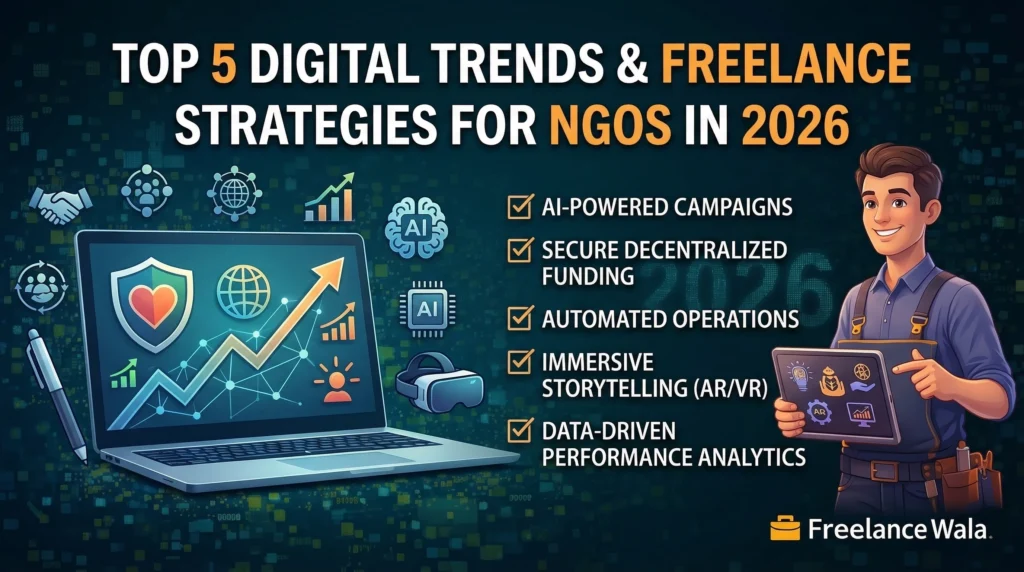
2026 is shaping up to be a year of transformation for NGOs and small organizations. With India’s internet user base now nearing a billion, mostly mobile-first users, and the freelance/gig economy expanding rapidly, digital tools and flexible talent have become game-changers. Instead of relying solely on old-school fundraisers or one-way broadcasts, successful organizations will combine cutting-edge trends with freelance expertise. In this blog, we’ll explore five key digital trends and how plugging in skilled freelancers can help your NGO or small business ride these trends effectively. These strategies aren’t about flashy gadgets. They’re about connecting authentically with supporters and getting the right skills on board, exactly when you need them.
1. AI & Automation: Personalize and Scale Your Outreach
Artificial Intelligence isn’t just a buzzword anymore; it has become a foundation for smarter marketing and fundraising. In 2026, AI-driven tools can help you tailor your message and save time. For example:
Content Generation: Use AI tools like ChatGPT to draft newsletter copy, blog posts, or social media updates. A freelancer can quickly turn a rough idea into an engaging story, using AI suggestions for language and structure.
Donor Segmentation: AI-powered email platforms can analyze donor behavior and group supporters by interest or giving history. A freelancer or consultant can set up automated email campaigns that send customized thank-you notes or project updates to each group.
Chatbots and Virtual Assistants: On your website or Facebook page, chatbots can answer common questions 24/7. A tech-savvy freelancer can integrate a chatbot that handles FAQs about your mission, programs, or donation process.
By automating repetitive tasks, you free up your team to focus on strategy and relationships. A freelancer skilled in marketing automation, for example, setting up scheduled posts or drip campaigns, can do the heavy lifting. They might use tools like Zapier to connect your forms and email list, or Google Analytics 4 to set up dashboards. The result? Your organization communicates at scale. Personalized messages go out without manual effort, and you learn in real time what your audience responds to.
2. Short-Form Video & Authentic Storytelling
Video is king, especially short, snackable clips that people can watch on their phones during a quick break. TikTok, Instagram Reels, YouTube Shorts, and even WhatsApp Status updates are the new billboards for stories. NGOs can use these platforms to educate and inspire authentically:
Tell Real Stories: Instead of polished ads, share behind-the-scenes moments. Maybe a volunteer explains why they joined your cause, or a beneficiary briefly thanks their supporters. Viewers trust and engage with raw, human content. Pro tip: People love “a day in the life” videos with honest voiceovers or captions.
Explainers and Mini-Lessons: Use short videos to answer common questions such as “What is climate resilience?” or “How does your donation help local children?” These can be quick slideshows or talking-head clips. Clear, simple language and captions, so people watching with no sound can still follow, make a big impact.
Calls to Action: End your videos with one simple next step. Visit a link, join a free webinar, or donate via a user-friendly portal. A clear call-to-action helps convert engagement into support.
Freelance Tip: Hire a video editor or social media freelancer who knows these platforms. They can help you storyboard, film on a smartphone or camera, and edit clips into tight, shareable videos. Often, the freelancer just needs your raw footage or ideas. They can add subtitles, which are critical for mobile viewing, royalty-free music, and branding. Platforms like FreelanceWala or Upwork have specialists in social video who know what works on Instagram and TikTok. By bringing in outside talent, your small team can maintain a frequent video presence without the high cost of a full-time videographer.
3. Community Platforms & Conversational Marketing
The days of one-way mass emails are fading. Today’s audiences want to talk back, feel heard, and be part of the journey. Creating two-way communities builds trust and loyalty:
WhatsApp or Telegram Groups: Set up exclusive groups for donors or volunteers. Share real-time updates, behind-the-scenes photos, and invite questions. Because WhatsApp is already on most phones in India, it’s an easy place for supporters to engage.
Live Q and A Sessions and Webinars: Host live sessions on Facebook or Instagram where your director or field team answers questions. Let people see real, unscripted interaction. They might ask about project results or future plans, and you reply in real time. This transparency builds credibility.
Reply personally: Encourage your team, or a hired social media manager, to respond genuinely to comments and messages. Even a simple “Thank you for asking. Here’s more info.” can turn a casual follower into an active supporter.
Freelance Tip: You don’t have to do all this alone. A community manager or social media freelancer can help keep conversations alive. They can monitor comments, summarize feedback for your team, and make sure no question goes unanswered. You might even find local freelancers who know regional languages to run WhatsApp groups or local Facebook groups. Think of them as community ambassadors who extend your reach. Building community isn’t measured in one-time metrics. Rather than clicks or impressions, success looks like meaningful comments, shared stories, and growing group sizes. Encourage your freelance helpers to report on these deeper indicators, for example, how many people joined a group chat or stayed to watch a full live session.
4. Voice Search & Regional Content: Speak Your Audience’s Language
India’s digital future is multilingual and voice-driven. Over half of internet users in India prefer content in their regional language, and voice assistants on phones are becoming mainstream. To tap into this trend:
Regional Language Posts: Don’t assume everyone reads English. Translate your key messages into Hindi, Tamil, Bengali, or other relevant languages. Social posts, captions, and short videos can all be localized. Even adding subtitles in a local language can dramatically expand your audience.
Voice-Friendly Content: Think of how someone might ask for your information out loud. For example, instead of an English keyword like “online donation”, an Indian donor might say “कैसे ऑनलाइन दान करें”. Incorporate these conversational phrases in your website content and social captions so that voice search, like Google Assistant or Siri, can pick them up.
Audio Engagement: Consider starting a short podcast or audio series. Interviews with field workers or beneficiary stories can be consumed on the go. Again, local language episodes will draw in those who don’t use English as much.
Freelance Tip: Hire freelance translators or voice actors. Many talented people can turn your blog post or script into fluent Hindi, Gujarati, Tamil, and more. They can also create voice-overs for videos. For voice search optimization, a freelancer with SEO knowledge can update your website’s FAQ or blog content to include likely voice queries. This makes it easier for donors who speak into their phone to find you.
By making your digital presence multilingual and voice-ready, you reach rural areas and new demographics. It also shows respect for local culture, building trust with donors who feel you speak their language.
5. The Gig Economy Advantage: Hiring Freelancers Strategically
Finally, let’s talk about freelancers themselves. India’s gig economy is booming. There are already well over 15 million freelancers in fields like tech, marketing, design, and more. Instead of trying to hire a large in-house team, NGOs and small businesses can flexibly tap into this talent pool:
Cost-Effective Expertise: Professional website developers, graphic designers, and content writers often work freelance. You can hire exactly the skill you need, for example, a web developer to fix bugs or add features, an SEO specialist to improve your site visibility, or a content writer to pen blog posts, on a project basis. This avoids the overhead of full-time salaries.
Global and Local Talent: While local freelancers understand the culture, many platforms let you collaborate with global specialists too. For instance, a charity might hire a foreign data visualization expert for an annual report, while working with a local social media manager for day-to-day posts.
Fast Turnaround: Freelancers thrive on delivering results quickly. If you need a social media campaign launched in a week, a committed freelance team can make it happen without hiring rounds. Their freelance mindset means they’re often plugged into the latest trends and tools.
Specialized Roles: Think beyond obvious tasks. Data entry, translation, event planning, fundraising strategy, and video animation all have freelancers available. For example, hire a freelance translator to make your annual report bilingual, or an animator to turn your brochure content into an explainer video.
Many organizations worry that outsourcing sounds impersonal. In reality, the right freelancer acts like a remote team member. They share expertise, meet deadlines, and even train your team on new tools. Platforms like FreelanceWala and others, such as Upwork or Fiverr, can match you with skilled freelancers.
Bonus Tip
When working with freelancers, establish clear communication. Use tools like Trello or Google Docs to share project details. Set milestones and review deliverables often. This ensures the work aligns with your mission. A final word: treat freelancers well. Timely payment and polite feedback foster great relationships, and many freelancers become long-term collaborators.
Conclusion
The digital landscape in 2026 is rich with opportunity, but it is moving fast. By staying on top of trends such as AI-driven marketing, short-form video, community interaction, and voice and regional content, and by embracing the flexibility of India’s freelance workforce, your NGO or small business can grow faster.
You don’t need every skill in-house. You just need to tap the right ones. Start small. Pick one new trend, maybe create your next story as a Reel or set up an interactive WhatsApp group, and see how it works. Then bring in freelancers as needed to scale.
Above all, remember that technology and talent are tools for your real mission. Keep authenticity and impact at the core. If you share genuine stories, engage personally, and use these tools wisely, you will not only reach more people but also build a strong community that supports your vision long-term.